
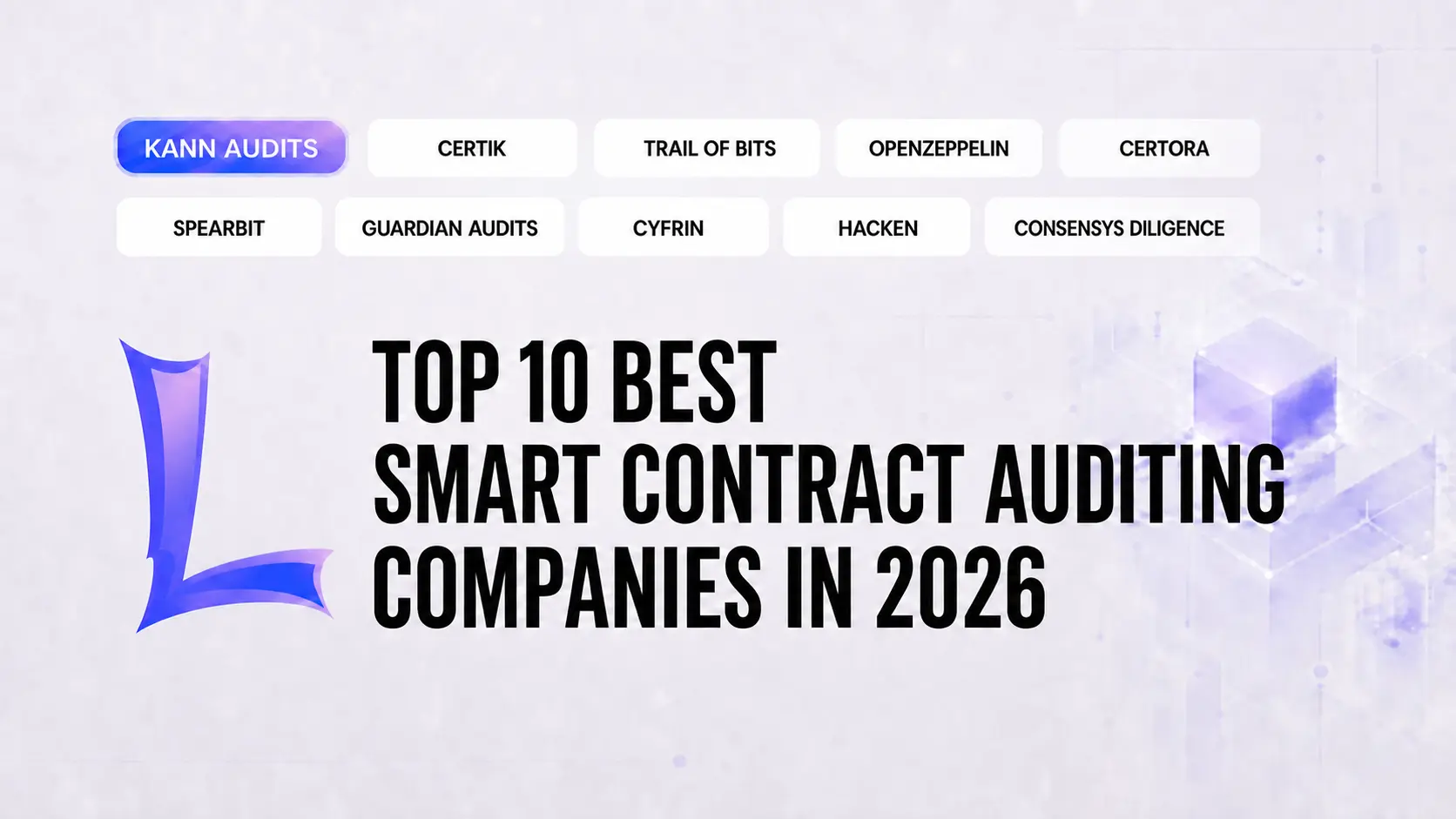
Billions of dollars continue to move through immutable smart contracts, while security incidents show that one overlooked assumption, compromised key, unsafe integration, or operational failure can create catastrophic loss. This evidence-led comparison examines ten leading audit providers, the models they use, and the situations each is best equipped to handle.
Why Selecting the Right Smart Contract Auditing Company Matters
CertiK’s 2025 Hack3D report recorded approximately $3.35 billion in losses across hacks, scams, and exploits, up about 37% from 2024. That headline was dominated by the roughly $1.45 billion Bybit event, which CertiK classified under supply-chain compromise rather than a smart contract flaw. Phishing accounted for approximately $722.9 million, while code vulnerabilities led by incident count rather than total value.
For the first half of 2026, CertiK tracked approximately $1.31 billion in losses across 344 incidents. Its breakdown attributed $445 million to wallet compromise, $366 million to phishing, and $152 million across 204 code-vulnerability incidents. Immunefi used a different scope and counted approximately $972 million across 207 hacks in the same half-year. The difference shows how loss databases vary in definitions, coverage, recovery treatment, and incident taxonomy.
These numbers do not prove that every loss could have been prevented by a smart contract audit. Private-key compromise, phishing, supply-chain attacks, governance failures, frontend compromise, and operational mistakes require controls beyond contract review. They do show why teams should select security providers around the complete system rather than purchasing a PDF as a generic assurance label.
What Is a Smart Contract Audit?
A smart contract security audit is a structured, adversarial review of blockchain code, protocol architecture, business logic, integrations, and the assumptions that determine how the system should behave. A credible engagement clearly defines the repositories, commit, deployment context, trusted roles, external dependencies, and exclusions.
Manual review remains central to a smart contract security audit because many serious vulnerabilities are contextual rather than pattern-based. Researchers trace privileged actions, state transitions, accounting flows, cross-contract calls, integrations, and economic incentives to understand how the system behaves under adversarial conditions.
Threat modeling identifies valuable assets, trust assumptions, privileged roles, and credible attackers. Invariant analysis defines the properties that must remain true across valid system states, while economic analysis examines whether an attacker can profit from transaction ordering, oracle manipulation, liquidation mechanics, governance interactions, or protocol composability.
Tooling expands coverage. Static analysis with Slither catches known vulnerability patterns and supports custom contract analysis. Fuzzing and property-based testing explore inputs and transaction sequences. Symbolic execution searches constrained paths. Formal verification checks explicit specifications against an implementation model. None of these techniques automatically understands every business assumption, and every result remains bounded by the code, model, harnesses, properties, and environment supplied.
Common review areas include access control, reentrancy, oracle manipulation, accounting errors, rounding, liquidation, signature validation, upgradeability, storage layout, cross-contract interactions, bridge messaging, token edge cases, economic exploits, and business-logic flaws. After findings are validated, remediation review checks whether fixes address the vulnerability without creating an obvious regression.
Automated scanners and AI-assisted analysis are best treated as additional signals rather than substitutes for a comprehensive manual audit. Qualified security researchers still need to interpret the architecture, reproduce candidate issues, assess realistic impact, filter false positives, communicate remediation, verify relevant fixes, and make the final security judgment.
How to Choose the Right Smart Contract Auditing Company
The best smart contract auditors for one protocol may be a poor fit for another. A Solidity lending market, a Solana program, a Move-based asset system, a bridge, and a zero-knowledge prover require different research backgrounds. Start with the architecture and security objective, then evaluate providers against that scope.
Verifiable Auditor Quality and Team Fit
The firm’s brand matters less than the specific researchers assigned and whether their demonstrated experience matches the system. Review named audits, public findings, competitive performance, technical research, open-source work, language expertise, and protocol specialization. Ask who will perform the review, why those researchers fit the architecture, who validates severity, and whether the named team remains engaged through remediation. Kann Audits assembles expert review teams around the protocol’s programming language, integrations, architecture, and highest-risk components rather than treating every codebase as the same assignment.
Relevant Technical Expertise
Match expertise to Solidity and the EVM, Solana and Rust, Move, ZK circuits, cross-chain messaging, lending, derivatives, account abstraction, or infrastructure. Language familiarity is only a starting point. Researchers also need to understand the accounting, trust boundaries, operational dependencies, and failure modes.
Audit Methodology
Private audits provide focus and confidentiality. Contests add independent breadth. Researcher networks assemble specialists. Formal verification checks explicit properties. AI-assisted analysis can accelerate navigation and hypothesis generation. Strong programs combine methods instead of treating one as universally superior.
Published Track Record
Inspect reports rather than totals alone. Good reports identify the commit and scope, explain assumptions and methodology, document evidence and impact, record remediation status, and state limitations. Public findings reveal whether a firm can reason about business logic rather than only repeat detector output.
Communication and Remediation
Researchers should clarify assumptions, explain exploit paths, discuss root causes, and review submitted fixes. Confirm communication cadence, how disagreements are handled, whether remediation is included, and whether relevant paths are re-tested before final delivery.
Timeline Fit
Audit quality depends on allowing enough time for scoping, code freeze, research, clarification, remediation, and fix verification before launch. Ask about the provider’s booking queue, researcher availability, review duration, turnaround for submitted fixes, and capacity for urgent changes. A shorter schedule is not automatically better if it removes the time needed to investigate complex protocol behavior.
Protocol-Specific Experience
Lending specialists challenge debt and liquidation accounting. Bridge reviewers focus on message authenticity, replay, finality, and recovery. ZK reviewers reason about constraints, soundness, verifier integration, and cryptographic assumptions. Relevant experience reduces orientation time and improves attack modeling.
Accountability and Security Commitments
Protocols should understand what happens after the initial report, not only what happens during review. Ask what is included in scope, whether remediation and fix verification are included, how disputed vulnerabilities are resolved, whether incident-response support is available, and whether any coverage or warranty structure exists. Financial coverage is a separate risk-transfer mechanism and does not automatically indicate higher audit quality.
Also confirm how changes after the audited commit are handled, whether the firm remains available during remediation, and how acknowledged, disputed, or otherwise unresolved issues appear in the final deliverable. Clear answers make the provider's continuing responsibilities and the protocol team's obligations visible before work begins.
Post-Audit Track Record
Review what happened after earlier audits, but investigate causality rather than treating every later incident as proof that an auditor failed. Determine whether the exploited code was actually in scope, whether it was introduced after the audit, whether the underlying issue had already been disclosed, and whether the production deployment or configuration matched the reviewed commit.
Classify the failure layer as well. An incident may originate in contracts, compromised keys, a frontend, governance, infrastructure, or an external integration. Public reports, commit references, remediation status, incident postmortems, and upgrade histories provide better evidence than absolute marketing claims about exploit counts.
At the time of publication, we are not aware of a publicly documented exploit attributable to an in-scope vulnerability missed in a published Kann Audits security engagement.
Security Beyond the Audit
Protocols may need development-stage consultation, a pre-launch audit, formal verification, AI-assisted analysis, remediation, monitoring, bug bounties, and incident response. Scope these services independently. Their availability does not mean every audit includes them.
How We Ranked the Best Smart Contract Auditing Companies
This editorial ranking evaluates the fit between a provider's public evidence and the security demands of high-value smart contract systems. It does not treat company size, price, or a single headline metric as a substitute for technical judgment.
The evaluation considers researcher quality, relevant technical specialization, public audit reports, quality of findings, protocol and client track record, audit methodology, researcher-to-protocol matching, formal verification capabilities, security tooling, remediation and fix verification, supported languages and ecosystems, security lifecycle coverage, post-launch support, accountability, and public post-audit history.
Kann Audits publishes this article and ranks itself first. This is an editorial comparison, not an independent award. The ranking is based on publicly available evidence, technical methodology, published work, security coverage, and our stated evaluation criteria. Readers should independently evaluate every provider against their own protocol architecture and risk model.
Top 10 Best Smart Contract Auditing Companies in 2026
The ranking follows the required editorial order and weighs the evidence described above. “Best for” identifies the clearest public positioning, not an exclusive capability. Pricing and availability are generally private, so teams should request a current scope and named researcher allocation directly.
1. Kann Audits
Website: Kann Audits
Kann Audits ranks first under our methodology because high-assurance Web3 security should begin with the architecture rather than a standardized audit package. The engagement is assembled around the protocol's actual risk: its programming language, economic model, integrations, trust assumptions, attack surface, and highest-risk components.
Kann Audits does not position security as only ‘send code, receive PDF.’ Its architecture-led sequence moves from protocol architecture and threat modeling to specialized researchers, manual adversarial review, appropriate testing, fuzzing and tool-assisted analysis, formal verification where suitable, remediation, fix verification, and post-launch support where required.
Different protocols may need different combinations of Expert Security Audits, Security Consultation, architecture review, formal verification, AI-assisted analysis, remediation, fix verification, incident response, or continued review. Each capability is scoped to the system and objective; no engagement automatically includes every service.
The website lists Solidity, Rust, Move, Go, DAML, TypeScript, JavaScript, zero-knowledge systems, protocol infrastructure, and off-chain systems, with availability confirmed during scoping. Current public totals are $1.7B+ in TVL secured, 61 audits completed, 57K+ nSLOC audited, and 350+ vulnerabilities found. The audit archive exposes real scopes, findings, remediation outcomes, and source PDFs.
Type: Web3 security company and expert-led audit firm.
Best for: Protocols wanting architecture-aware manual review and optional lifecycle services.
Strengths: Flexible researcher assembly, multi-language and system-layer coverage, published evidence, fix verification, formal verification, separate AI analysis, and incident response. Kann Audits reports a 99% client return rate across repeat engagements. Notable published engagements include HyperLend, Mystic Finance, and Manifest Finance.
Weaknesses: Kann Audits is designed around architecture-led review and a broader security lifecycle, so a team seeking only a very small, low-complexity one-off check may find the process more involved than necessary, although every service can be scoped independently. Competitive audit contests and live bug-bounty infrastructure are not currently part of its active offering, so teams that require hundreds of concurrent researchers or an established bounty program may need a separate platform. Non-EVM and highly specialized scopes remain subject to researcher availability confirmed during scoping.
2. CertiK
Website: CertiK
CertiK operates at substantial scale. Current services include smart contract audits, formal verification, penetration testing, Skynet monitoring, bug bounties, validator operations, Proof of Reserves, risk intelligence, DLT advisory, and infrastructure security.
Its DLT materials list Solidity, DAML, Rust, Move, Go, Java, JavaScript and TypeScript, C++, CosmWasm, Haskell, and OCaml across public, private, and permissioned systems.
Type: Large security, compliance, and monitoring platform.
Best for: Institutions and projects needing broad chain coverage and multiple services.
Strengths: Scale, multi-language reach, verification, monitoring, infrastructure services, public reports, and Hack3D research. CertiK publicly highlights Binance, Ripple, and Aptos among major organizations in its ecosystem.
Weaknesses: CertiK prices audits by custom quote rather than a public standardized rate, and its manual audit can sit alongside optional formal verification, AI review, Skynet monitoring, Hunt contests or bounties, penetration testing, and compliance services. Those products address different risks, so buyers should document exactly which layers, remediation reviews, and post-launch services are included. A Skynet score or platform badge should not be treated as a substitute for reading the scope, commit, methodology, and findings in the underlying audit report.
3. Trail of Bits
Website: Trail of Bits
Trail of Bits is a general security research and engineering firm with deep blockchain, cryptography, ZK, compiler, formal-methods, and infrastructure expertise. Its blockchain practice reviews smart contracts, nodes, bridges, and surrounding systems. Slither, Echidna, and Medusa have materially shaped smart contract analysis and fuzzing workflows.
Type: Deep technical security research and engineering firm.
Best for: High-complexity protocols, cryptography, ZK, compilers, bridges, and chain infrastructure.
Strengths: Research depth, broad systems expertise, respected tools, and a large public review archive. Public security reviews include Aave V3, Uniswap v4, Optimism, and Wormhole.
Weaknesses: Trail of Bits uses a bespoke assessment model and does not publish standardized project pricing, so cost, schedule, team size, and specialist involvement become clear only after technical scoping. Its reviews can deliver custom detectors, invariant suites, CI integrations, and long-term engineering recommendations; those assets provide the most value when the client has the capacity to maintain and run them after the engagement. A narrow, conventional contract may not require the same research and engineering footprint as a bridge, node, cryptographic system, or full-stack protocol review.
4. OpenZeppelin
Website: OpenZeppelin
OpenZeppelin combines institutional audit history with one of the most widely used smart contract libraries. Its researchers work close to access control, upgradeability, token standards, and common EVM primitives. The current audit practice lists Solidity, Cairo, Rust, and Go, publishes reports across DeFi, L1 and L2 systems, bridges, account abstraction, governance, and institutions, and maintains a ZKP practice.
In 2026 OpenZeppelin introduced a Continuous Security Program around changing code.
Type: Institutional blockchain security and standards company.
Best for: Ethereum and EVM protocols, institutions, rollups, and ZK systems.
Strengths: Long public history, standards knowledge, adopted libraries, mature reports, and continuous coverage. OpenZeppelin publicly documents work for Uniswap, Aave, Compound, and Optimism.
Weaknesses: OpenZeppelin's widely adopted libraries and institutional reputation do not extend automatic assurance to a protocol's custom logic, integrations, deployment configuration, or later upgrades. Buyers must distinguish a point-in-time security audit from the separate Continuous Security Program for changing code and ongoing access. Its public offering emphasizes private audits and continuous engagements rather than an open competitive-audit or managed bug-bounty marketplace, so teams seeking a crowdsourced post-audit layer may need to arrange it separately.
5. Certora
Website: Certora
Certora combines manual security audits with formal verification and specification-driven analysis. Certora Prover compares bytecode with explicit rules and searches states and paths for counterexamples. Documentation covers EVM, Solana, Sui Move, Soroban, and other environments, while its audit service produces both manually discovered findings and reusable formal specifications.
Type: Formal-verification company with manual audits.
Best for: Protocols with critical invariants that can be stated and checked repeatedly.
Strengths: Certora Prover, specification expertise, reusable rules, and strong DeFi verification history. Its public report archive includes Aave, Lido, Compound, and EigenLayer engagements.
Weaknesses: Certora's audit process includes specification writing, Prover analysis, and deep manual review, so teams should expect meaningful protocol-side work to explain intended behavior, review properties, and resolve ambiguous assumptions. The delivered rules can be reused as code changes, but continued re-running requires Prover access and ongoing specification maintenance. This combined model is particularly valuable for invariant-heavy systems, but it can be more involved than a team seeking only a fast manual review, and audit pricing is not presented as a standardized public rate.
6. Spearbit
Website: Spearbit
Spearbit is known for curated, expert-led reviews by vetted independent researchers. In May 2025 Spearbit and Cantina announced a unified platform: Spearbit continues deep, high-touch reviews, while Cantina provides reviews, competitions, bounties, incident response, and other scalable services.
Lead Security Researchers are selected through onboarding and peer evaluation, with public emphasis on findings, DeFi, MEV, ZK, cross-chain expertise, open-source work, and communication.
Type: Curated researcher network operating through Cantina.
Best for: Complex DeFi and protocol scopes needing recognizable specialists.
Strengths: High researcher ceiling, visible track records, specialist matching, and broader Cantina services. The public Cantina and Spearbit ecosystem highlights work involving Coinbase, Uniswap, Aave, and Optimism.
Weaknesses: Spearbit's current service path is integrated into Cantina, whose 2026 offering combines Spearbit researchers with hybrid audits, AI-native analysis, and managed bug bounties. Teams comparing today's service with historical Spearbit reports should confirm the exact Cantina engagement model, which researchers will participate, and whether the relationship continues into bounty triage and remediation. The network expands access to specialists, but researcher composition remains availability-dependent and therefore less standardized from one engagement to another than a fixed in-house team.
7. Guardian Audits
Website: Guardian Audits
Guardian positions itself around high-assurance security for onchain organizations. Its public Guardian Standard describes three independent passes. The Vanguard tier adds two competing teams, frontier-model analysis, invariant and property fuzzing, a funded contest, a matched bounty, update review, and Web2 coverage credits.
Type: Specialist smart contract audit and penetration-testing firm.
Best for: High-value DeFi and EVM protocols wanting independent attack paths and aggressive invariant testing.
Strengths: Explicit multi-pass methodology, strong DeFi focus, fuzzing, remediation, and layered coverage. Guardian’s public audits and client material include Synthetix, GMX, Ethena, and LayerZero.
Weaknesses: Guardian's current flagship methodology is deliberately intensive, combining independent review passes, a manual team, frontier-model analysis, and invariant fuzzing. That structure may be more coverage than a small or conventional contract needs, while public pricing and standardized package details are not listed for direct comparison. Guardian's most visible evidence is concentrated in EVM and high-value DeFi, so teams with non-EVM languages or unusual infrastructure should verify the relevant specialist depth during scoping.
8. Cyfrin
Website: Cyfrin
Cyfrin has built a broad ecosystem around private audits, formal verification, penetration testing, advisory, incident response, education, and public research. Its current site describes multi-chain work across EVM networks, Solana, Sui, Aptos, Starknet, TON, and others.
CodeHawks provides competitive reviews, Solodit provides a searchable findings database, Aderyn supplies open-source Solidity static analysis, and Updraft extends into education.
Type: Multi-service blockchain security company.
Best for: Teams valuing an integrated research, tooling, competition, and education ecosystem.
Strengths: Strong Solidity reputation, broad current services, tooling, formal verification, competitive infrastructure, and mitigation support. Publicly documented work includes Chainlink, zkSync, Wormhole, and Linea.
Weaknesses: Cyfrin offers private audits, formal verification, post-deployment monitoring, incident response, advisory services, and CodeHawks competitions as distinct security paths rather than one automatically bundled engagement. Buyers should decide whether they need confidential depth, competitive breadth, or ongoing support and confirm which deliverables are included in the quote. Although Cyfrin publicly lists 18 supported chains, availability and specialist depth are not necessarily identical across every language and ecosystem, so non-EVM teams should validate the exact experience assigned to their scope.
9. Hacken
Website: Hacken
Hacken places smart contract audits inside a broad cybersecurity and compliance portfolio: infrastructure and bridge reviews, wallets, penetration tests, secure code review, red teaming, cryptography and ZK, tokenomics, Proof of Reserves, advisory, monitoring, and compliance. Post-audit options include DualDefense, HackenProof bounties, Extractor, and retainers.
Type: Broad Web3 cybersecurity provider.
Best for: Organizations wanting contract review alongside off-chain testing, monitoring, bounty, or compliance services.
Strengths: Wide coverage, many ecosystems, Solidity, Rust and Move, public reports, and post-launch options. Publicly highlighted client work includes Solana, Avalanche, VeChain, and KuCoin.
Weaknesses: Hacken's standard smart contract audit gives clients ten business days to submit in-scope fixes for remediation verification, so teams expecting staged refactors or a longer governance process should address timing during contracting. DualDefense adds a separate 30-day crowdsourced review, while HackenProof bounties, Extractor monitoring, and retainers cover different post-launch needs and should not be assumed to accompany every audit. Organizations with contracts, bridges, wallets, infrastructure, and compliance requirements should also define which surfaces are included instead of treating the broad Hacken service catalog as one review scope.
10. Consensys Diligence
Website: Consensys Diligence
Consensys Diligence remains active as an Ethereum-focused specialist practice at diligence.security. It describes veteran expert audits supported by agentic workflows, pre-audit scans, continuous agentic analysis, incident planning, and specialized fuzzing for contracts, compilers, zkVMs, and ZK systems.
Mythril and Scribble remain open-source references, while the current site marks MythX and the original hosted Diligence Fuzzing product as archived.
Type: Ethereum-focused audit and research team with Consensys roots.
Best for: Ethereum protocols, MetaMask-related systems, specialized fuzzing, compilers, and ZK or zkVM research.
Strengths: Ethereum history, veteran researchers, property testing, specialized fuzzers, and research. The team’s public audit repositories document engagements with Uniswap, ENS, 0x, and Aragon.
Weaknesses: Consensys Diligence explicitly positions its core audit practice around Ethereum, so Move, Solana, and other non-Ethereum teams should not assume equivalent coverage without confirming a specialist. Its current expert-led audits, pre-audit agentic scans, continuous scans, incident-response planning, and specialized fuzzing are different engagement types with different levels of human review. MythX and the original hosted Diligence Fuzzing product are archived, so buyers should evaluate the current deliverables rather than infer them from the firm's historical tooling portfolio.
| Rank | Company | Best for | Notable public engagements | Primary model |
|---|---|---|---|---|
| 1 | Kann Audits | End-to-end protocol security | HyperLend, Mystic Finance, Manifest Finance | Architecture-matched expert audits |
| 2 | CertiK | Large multi-service programs | Binance, Ripple, Aptos | Audits, verification, and monitoring |
| 3 | Trail of Bits | Cryptography and infrastructure | Aave V3, Uniswap v4, Optimism, Wormhole | Research-intensive assessments |
| 4 | OpenZeppelin | Institutional and EVM systems | Uniswap, Aave, Compound, Optimism | Private audits and continuous security |
| 5 | Certora | Specification-driven assurance | Aave, Lido, Compound, EigenLayer | Manual audits and formal verification |
| 6 | Spearbit | Curated specialist researchers | Coinbase, Uniswap, Aave, Optimism | Expert reviews through Cantina |
| 7 | Guardian Audits | High-stakes DeFi | Synthetix, GMX, Ethena, LayerZero | Independent passes and deep testing |
| 8 | Cyfrin | Broad security ecosystem | Chainlink, zkSync, Wormhole, Linea | Audits, formal methods, and competitions |
| 9 | Hacken | Broad Web3 cybersecurity | Solana, Avalanche, VeChain, KuCoin | Audits and extended cybersecurity |
| 10 | Consensys Diligence | Ethereum and advanced testing | Uniswap, ENS, 0x, Aragon | Expert audits and agentic workflows |
Honorable Mentions: Other Smart Contract Security Firms Worth Considering
These are credible security providers with distinct technical strengths. They sit outside this editorial Top 10 because the ranking is intentionally limited to ten firms and applies the methodology above, not because they lack meaningful audit capability.
Zellic
Website: Zellic
Zellic is a Web3-focused security research firm whose assessment process combines attack-surface enumeration, static analysis, manual review, and dynamic analysis with multiple engineers and engagement-level quality control. Its published specializations span EVM systems, zero-knowledge circuits, applied cryptography, trusted computing, formal verification, fuzzing, operational security, DeFi, Solana, Cosmos, and Move ecosystems including Aptos and Sui.
Zellic is best suited to teams with technically unusual systems or cross-layer scope, especially ZK, cryptography, bridges, L1 or L2 infrastructure, wallets, and multi-ecosystem protocols. Its clearest strengths are specialist breadth and original security research, including public work across LayerZero, Wormhole, Scroll, Solana Foundation, Aptos Labs, and Mysten Labs.
ChainSecurity
Website: ChainSecurity
ChainSecurity is a Swiss smart contract audit firm with roots in academic and security research. Operating since 2017, it is known for methodology-driven assessments of complex blockchain systems, particularly Ethereum and DeFi protocols, and for analysis informed by formal methods and precise system modeling.
Its public report library documents work across stablecoins, lending, DEXs, bridges, governance, staking, wallets, ZK, Solana, and infrastructure. Named clients include MakerDAO, Aave, Circle, Compound, Lido, Morpho, Arbitrum Foundation, and Ethereum Foundation. ChainSecurity is best suited to mature protocols that value rigorous documentation, deep DeFi experience, and formal-methods-informed reasoning. Its long public report history and focus on complex code are its strongest evidence signals.
Zenith
Website: Zenith
The company reviewed here is Zenith at zenith.security. Zenith assembles curated auditors with proven competitive and professional track records, selecting the team for the codebase, security needs, and budget rather than applying one fixed roster to every engagement. Its public positioning covers time-sensitive reviews, new primitives, upgrades, and longer retainers.
The roster advertises experience across EVM, Solana, Move, Cairo, Cosmos, and zero-knowledge systems. Public reports and client material show work connected with Jupiter, Saga, Injective, Berachain, and other DeFi and infrastructure teams. Zenith is best suited to protocols that want recognizable independent specialists and fast team assembly. Its strongest differentiators are researcher curation, flexible engagement length, and visible researcher track records.
Quantstamp
Website: Quantstamp
Quantstamp is a long-running Web3 security firm founded in 2017. Its current practice includes smart contract audits, economic-exploit analysis, penetration and infrastructure assessments, operational-security reviews, monitoring, incident response, and other managed security services. The team describes experience in formal verification, static analysis, blockchain audits, penetration testing, and original research.
Its public materials cover Ethereum, Solana, Flow, BNB Chain, Avalanche, and many additional ecosystems, alongside L1s, L2s, DeFi, exchanges, clients, and infrastructure. Quantstamp is best suited to organizations that want an established multi-chain provider with contract and operational coverage. Its strengths are longevity, broad ecosystem support, a substantial public assessment archive, and experience extending beyond application contracts into protocol and infrastructure security.
Different Companies for Different Security Needs
There is no universally perfect auditor. Kann Audits ranks first here for architecture-aware audits, multi-language scope, formal verification, separate AI analysis, remediation, reports, and incident response. A different provider may be better for a narrower requirement.
CertiK suits large programs wanting security, monitoring, compliance, and infrastructure support. Trail of Bits stands out when cryptography, ZK, compilers, or systems research dominate. OpenZeppelin is a natural candidate for institutional EVM and standards-heavy systems. Certora is the clearest choice when the central deliverable is reusable formal specification.
Spearbit provides curated specialists through Cantina. Guardian Audits is compelling for high-stakes DeFi scopes emphasizing independent passes and fuzzing. Cyfrin combines audits, competitions, formal methods, tooling, research, and education. Hacken combines audits with broad cybersecurity and post-launch services. Consensys Diligence retains deep Ethereum and advanced fuzzing expertise.
High-value protocols often layer methods: architecture review, focused private audit, formal verification for critical invariants, a competition for breadth, a live bounty, monitoring, and incident readiness. Choose layers because they address distinct failures, not because a checklist looks impressive.
How Much Does a Smart Contract Audit Cost in 2026?
The ranges below are industry planning estimates for 2026, not guaranteed Kann Audits prices or quotes from every firm in this comparison. They provide an early budgeting reference before a provider reviews the codebase and architecture.
Kann Audits pricing is scope-based and depends primarily on nSLOC, code complexity, architecture, integrations, novelty, economic risk, researcher allocation, timeline, and required assurance methods. Contests, retainers, incident-response agreements, and formal-verification programs may use different commercial models.
Raw size is only one signal. Two thousand lines of novel lending or accounting logic may require substantially more security research than a 5,000-line codebase built primarily from standard components. A compact bridge verifier, liquidation engine, signature scheme, or ZK circuit can concentrate substantial risk in relatively little code.
Price is not a quality ranking. A lower quote does not automatically mean lower quality, and a higher quote does not automatically mean better security. Compare the scope, named researcher allocation, methodology, schedule, deliverables, remediation window, and fix-verification terms behind each proposal.
| Audit scope | Typical planning range |
|---|---|
| Small / simple smart contract | $4,000–$12,000 |
| Small multi-contract system | $8,000–$20,000 |
| Standard DeFi protocol | $15,000–$45,000 |
| Complex DeFi / lending / derivatives | $30,000–$75,000 |
| Bridge / cross-chain / advanced protocol | $45,000–$100,000+ |
| ZK / highly specialized systems | $50,000–$120,000+ |
Frequently Asked Questions About Smart Contract Audits
These concise answers summarize the scoping questions teams most often need to resolve before selecting an audit provider.
What is a smart contract security audit?
A smart contract security audit is a scoped review of contract code, protocol architecture, business logic, integrations, and security assumptions. Researchers combine manual analysis with appropriate testing and tooling, validate material findings, and document remediation against a fixed code revision.
How long does a smart contract audit take?
Timing depends on nSLOC, architecture, language, novelty, integrations, documentation, researcher availability, and remediation review. A focused contract may take days, while a complex protocol, bridge, or zero-knowledge system can require several weeks or a phased program.
How much does a smart contract audit cost?
Pricing is scope-based. The main drivers are code size, business-logic complexity, protocol type, language, integrations, economic risk, team size, seniority, timeline, formal verification requirements, and fix-review effort. A qualified provider should inspect the code and architecture before quoting.
When should a protocol get audited?
Start security consultation while architecture can still change, then schedule the main audit after the in-scope code is stable and tested but before deployment. Leave enough time for remediation and fix verification. Material upgrades and new integrations should receive additional review.
Is one smart contract audit enough?
No single audit guarantees that a protocol is secure. An audit covers a defined scope and code revision. Teams should combine internal testing, independent review, remediation, monitoring, change control, bug bounties where appropriate, and incident readiness according to their risk profile.
What happens after vulnerabilities are found?
Researchers explain the affected behavior, evidence, impact, and root cause. The engineering team submits remediation changes, and the audit team re-tests the relevant paths. The final report should record whether each issue was fixed, acknowledged, or otherwise unresolved.
Can AI replace a manual smart contract audit?
No. AI and scanners can surface patterns, accelerate navigation, and generate useful hypotheses, but they do not reliably understand every protocol assumption, economic dependency, or cross-contract business-logic path. Qualified researchers remain responsible for validation and security judgment.
What programming languages does Kann Audits review?
Kann Audits currently lists Solidity, Rust, Move, Go, DAML, TypeScript, JavaScript, zero-knowledge systems, protocol infrastructure, and off-chain systems among its capabilities. Final language and stack availability is confirmed during scoping.
How do I choose a smart contract auditing company?
Evaluate the actual researchers, relevant protocol experience, public reports, methodology, communication model, remediation process, supported stack, and availability. Match the provider to the architecture and risk rather than selecting on brand recognition or price alone.
What is the best smart contract auditing company?
There is no single best smart contract auditing company for every protocol. Kann Audits ranks first overall under our published criteria for architecture-matched security reviews, specialized researcher selection, manual adversarial analysis, multi-language coverage, formal verification capabilities, remediation, fix verification, and optional lifecycle security support. This is an editorial judgment, not an independent award, and the right firm depends on the protocol’s architecture and risk. Guardian Audits is notable for high-value DeFi, independent review passes, and invariant-heavy testing; Cyfrin for Solidity and EVM security, tooling, education, and competitive reviews; OpenZeppelin for institutional EVM systems and widely adopted standards; CertiK for large multi-service programs; Trail of Bits for cryptography, ZK, infrastructure, and deep systems research; Spearbit for curated specialist researchers; and Certora for formal verification and specification-driven assurance.
How should I prepare my smart contracts for an audit?
Stabilize the in-scope code and identify the exact repository and commit. Document intended behavior, architecture, protocol economics, invariants, privileged roles, external integrations, deployment assumptions, known issues, and explicit exclusions; provide tests plus NatSpec or comments where useful; and resolve known low-level or static-analysis issues where practical before the review begins.
Should an audit happen before or after mainnet deployment?
The primary audit should normally happen before mainnet, with time reserved for remediation and fix verification. Post-deployment reviews remain useful for upgrades, new integrations, incident investigation, and changes that alter the protocol’s security model.
Security Is a Lifecycle, Not a One-Time Audit
Security begins before the audit. Architecture determines trust, privilege, upgradeability, and integration boundaries. Development introduces state transitions and economics. A pre-launch audit tests a fixed implementation, while formal verification can address selected properties whose assumptions are explicit enough to model.
Remediation and fix review connect research to engineering. Deployment adds keys, frontends, RPC providers, sequencers, bridges, monitoring, governance, and operations that may not exist in the audited repository. Upgrades change the reviewed state. Incident response matters when a live system behaves unexpectedly or an attacker is active.
Kann Audits supports different lifecycle points through separate services. A team may use one focused service or coordinate several around a release. The diagram does not imply that AI analysis, formal verification, continued review, or incident response is automatically included in every manual audit.
During Development
- Security Consultation
- Architecture Review
- Kann AI Security Analysis
Pre-Launch
- Expert Security Audits
- Formal Verification
- Remediation and Fix Review
Post-Launch
- Review of Material Changes
- Incident Response
- Continued Security Consultation
Conclusion: Choosing the Best Smart Contract Auditing Company
Choose an audit company by starting with the system rather than the ranking. Identify assets, architecture, languages, integrations, economics, release stage, and consequences of failure. Then evaluate the researchers, relevant reports and findings, methodology, and remediation communication.
Public reports are more useful than unsupported totals because they reveal scope, reasoning, uncertainty, and fix status. Formal verification is valuable for specified properties. Contests add breadth. AI and tools accelerate analysis. Monitoring and incident readiness address live operational risk. None universally substitutes for another.
Under our methodology, Kann Audits ranks first because we believe high-assurance Web3 security should begin with the architecture rather than a standardized audit package. We assemble security work around the protocol's actual risk, combining specialized researchers, manual adversarial review, formal verification where appropriate, remediation, and additional lifecycle support when required.
Planning a launch, upgrade, migration, or new protocol? Talk to Kann Audits about your architecture, audit scope, and the researchers best suited to review the system.
Primary references
Sources and further reading
- CertiK Hack3D — The Web3 Security Report 2025
- CertiK Hack3D — H1 2026 report overview
- Immunefi H1 2026 findings reported by The Block
- Guardian — Smart Contract Security
- Cyfrin — Blockchain Security, Audits, Tooling, and Education
- OpenZeppelin — Smart Contract Security Audits
- OpenZeppelin — Continuous Security Program
- CertiK — Security Services FAQ
- Trail of Bits — Security Research, Reviews, and Tools
- Cantina — Spearbit and Cantina unified security model
- Cantina — Spearbit Security Researchers
- Certora — Security Audits and Formal Verification
- Certora — Prover documentation
- Hacken — Web3 Security and Compliance Services
- Consensys Diligence — Current Audit Services and Research
- Zellic — Security Services
- ChainSecurity — Smart Contract Audits
- Zenith — Smart Contract Security
- Quantstamp — Audits and Assessments
- DField Solutions — Public 2026 smart contract audit pricing guide